Night Hikes at Manice
@knrd_dbsz
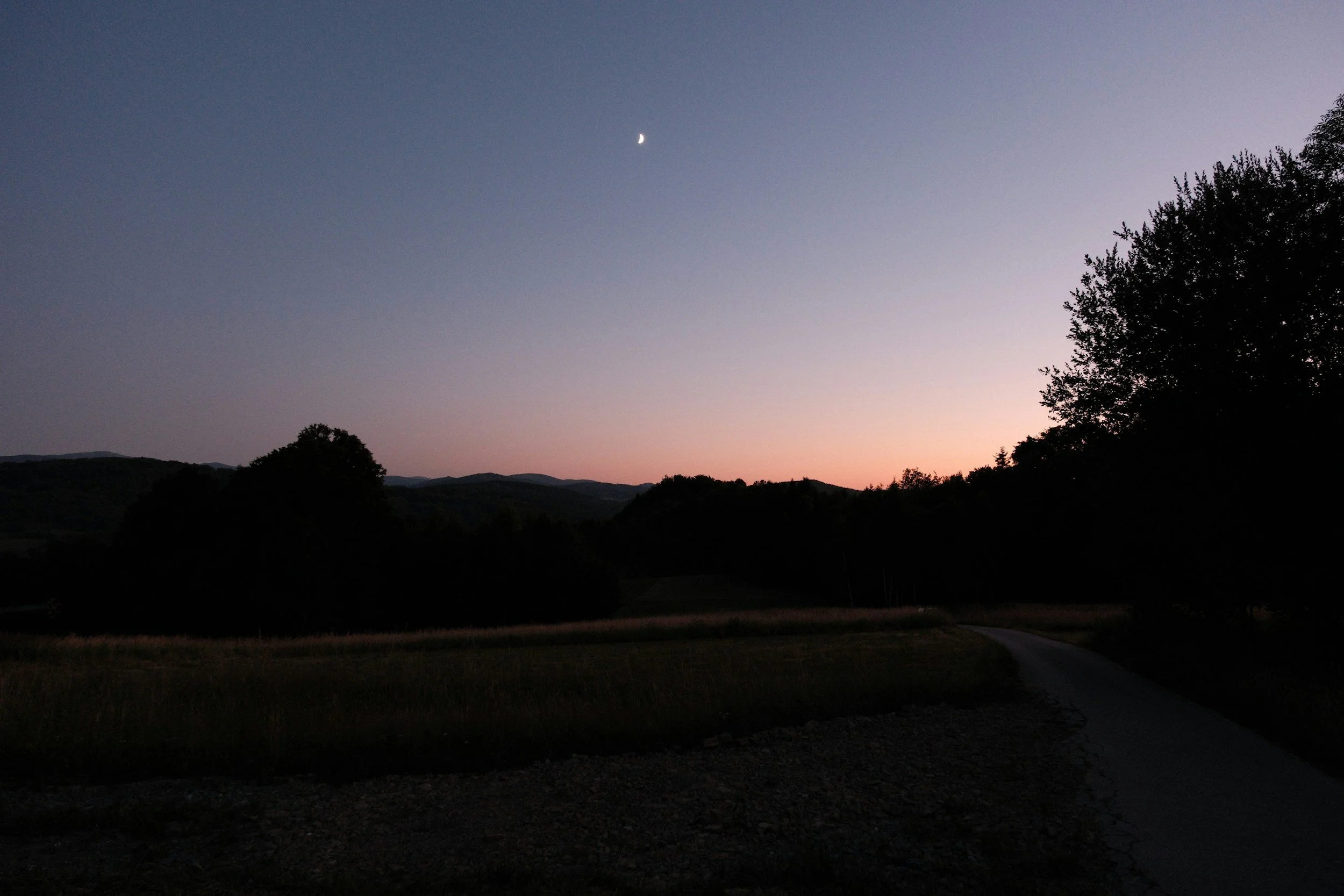
Nighttime in northwestern Massachusetts looks and feels very different from nighttime in the heart of New York City, and the thesis of the “night hike” is to help campers feel more comfortable and confident in that difference. Every student who attends a program at Manice Education Center participates in a night hike. Alumni often cite it as one of the most impactful experiences of their Christodora journey, and each activity on the night hike engages your senses beyond vision.
A night hike begins with a game of Bat & Moth; this call-and-response tag game takes place inside a human circle, with one student, the “bat,” blindfolded and the other, the “moth,” not blindfolded. The bat claps, and the moth claps back, echoing the bat’s use of echolocation to find prey in the dark. The human circle creates a boundary to keep the blindfolded student safe. Once every student has played a round, they transition to a Caterpillar walk, a single-file, blindfolded group walk in which students use their sense of touch and hearing to reach the final location. Students place their hands on the shoulders of the person in front of them and must walk slowly and patiently, guided by the line leader, who listens for claps from the educators to make their way.
As the students are blindfolded, they learn about the rod and cone cells in their eyes that capture and distribute light and help diurnal animals develop “night vision.” The darker it is, the faster those cells adapt their vision to the dark, so by the time the students reach their final activity spot, the blindfolds have helped acclimate their eyes for the “solo walk.” This walk is the transformative part of the night hike; each student is encouraged to walk a portion of the trail alone, unblindfolded, using a call-and-response with the educator who waits for them to find their way, if necessary.
The purpose of the night hike is twofold: it helps students understand how different animals, whether nocturnal or not, survive and navigate at night. It also helps students build their confidence, become comfortable in the dark, and take supported risks they may not take back home. This is especially helpful when students take part in a night hike before they go on backpacking or canoeing trips, staying in tents away from our campus for multiple days!
Written by Jake Kreuzer, VP of Programs